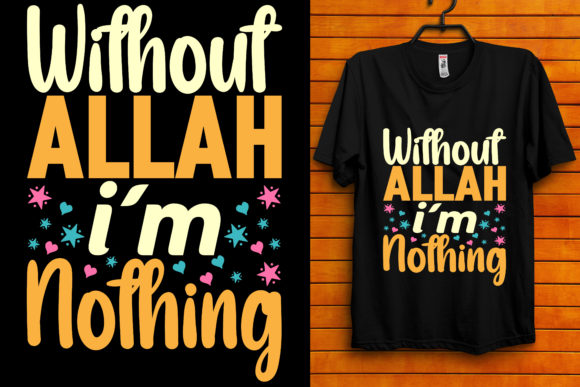
Without Allah I m Nothing: A Designer's Real-World Review
As someone who spends hours hunched over an embroidery machine, tweaking tension and selecting the perfect thread spool, I approach every new machine embroidery design with a critical eye. It is not enough for a file to look good on a screen; it must translate beautifully into thread, holding its integrity across different fabrics and hoop sizes. Recently, I evaluated the "Without Allah I m Nothing" design, a piece that sits at the intersection of faith-based expression and modern typography. This review breaks down how this graphic performs when moved from a digital asset to a tangible, stitched reality.
First Impressions and Visual Personality
When I first opened the files, the immediate takeaway was the clean, minimalist aesthetic. In the world of Crafts and Graphics, less is often more, especially when dealing with profound statements. The phrase "Without Allah I m Nothing" carries significant weight, and the design respects that gravity by avoiding unnecessary flourishes or overly complex borders. The layout feels balanced, with a typographic flow that suggests it was created with vector precision before being converted into an embroidery file.
The mood is contemplative yet confident. It does not scream for attention; instead, it invites a closer look. For a designer, this is crucial. A design that is too busy can get lost in the texture of a towel or the nap of a sweatshirt. This piece, however, relies on strong letterforms and clear spacing. Whether rendered in a classic satin stitch for a glossy finish or a matte fill stitch for a softer touch, the visual personality remains intact. It feels versatile enough to sit comfortably in a boutique shop window or on a personal item meant for daily wear.
Real-World Application: The Custom Tote Bag Scenario
To truly test the viability of this design, I imagined a specific real-life scenario: creating a custom embroidered tote bag for a local community event. Tote bags are popular handmade products, but they present challenges due to their woven texture and potential for shifting during stitching.
In this context, "Without Allah I m Nothing" shines as a statement piece. Placed centrally on a canvas bag, the text offers high readability. Because the design is likely available in editable formats like AI, EPS, SVG, and DXF, I could easily adjust the size to fit a standard hoop without losing resolution. The 300 DPI JPGs and transparent backgrounds mentioned in the product details are excellent for creating printable mockups to show clients before a single stitch is made. This step is vital for an Etsy seller or anyone running a craft business, as it manages customer expectations regarding the final look.
If I were to stitch this onto a heavy cotton tote, I would lean towards a denser stitch count to ensure the letters do not get swallowed by the fabric weave. The result would be a professional-looking finished product that elevates a simple bag into a meaningful accessory. It works equally well as custom apparel, perhaps on the back of a denim jacket or the chest of a modest hoodie, where the message serves as a quiet declaration of faith.
Navigating Fabric Challenges and Stitch Density
While the design is strong, practical application requires caution. Not all fabrics behave the same way. If you are planning to use this on stretchy materials like jersey knits for baby embroidery or athletic wear, you must pay close attention to your stabilizer choice. A cut-away stabilizer is non-negotiable here to prevent the text from puckering over time. The phrase includes relatively thin lines depending on the font weight chosen; if the stitch density is too high on a stretchy fabric, the material will gather, distorting the message.
Similarly, textured fabrics like Terry cloth towels or thick fleece sweatshirts require a different approach. On these surfaces, a running stitch outline might get lost. I recommend testing a version with slightly thicker lettering or adding a subtle underlay to lift the text off the surface. For dark fabrics, the contrast of the thread colors becomes the most important variable. Since the product offers 100 color-changeable options, you have the flexibility to adapt. However, always test your light threads on dark fabric first to ensure the background does not peek through the stitches, which can ruin the legibility of such a sensitive phrase.
Curved surfaces, such as caps or hats, present another hurdle. The center of the cap is small, and the curvature can distort straight lines. "Without Allah I m Nothing" might need to be arched or reduced significantly to fit a standard cap hoop size. If the lettering becomes too small, the tiny details between letters could merge during stitching. In this case, simplifying the design or opting for an embroidered patch that is later sewn onto the hat might yield a cleaner result than direct stitching.
Commercial Viability and Brand Consistency
For small shop product creators and digital product sellers, consistency is key to building trust. This design supports brand consistency because of its clean lines and adaptable nature. Whether you are selling holiday embroidery gifts, wedding favors, or nursery decor, the neutral yet powerful style fits various themes without clashing.
The inclusion of high-quality mockups in the package is a significant value-add. It allows you to present the design in a realistic setting immediately, saving hours of Photoshop work. For an Etsy listing, having a mockup that shows the design on a pillow cover or a tea towel can dramatically increase buyer engagement. It helps the customer visualize the personalized gift in their own home.
However, before listing this as a commercial embroidery asset or selling finished items, you must verify the licensing terms. While the description mentions editable files and commercial-ready formats, always confirm whether the license covers unlimited physical sales or if there are restrictions on reselling the digital files themselves. Protecting your craft business means respecting intellectual property just as much as protecting your stitch quality.
Practical Notes for the Embroiderer
Before committing to a production run, I always advise a few practical steps. First, stitch out the design on a scrap piece of the exact fabric you intend to use. This reveals how the fabric texture interacts with the thread. Second, check the transition points between letters. In phrases with spiritual significance, clarity is paramount; a tangled thread or a bird's nest in the negative space can detract from the message.
Also, consider the washing instructions for the end user. Dense areas may hold up better, but they can also make the fabric stiff. If this is for a baby item or a frequently washed kitchen towel, ensure the backing is trimmed close and the stitch type allows for flexibility. Finally, view your test stitch-out in black and white. If the design loses its impact without color, you may need to adjust the contrast or thickness of the elements.
In conclusion, "Without Allah I m Nothing" is a robust addition to any designer's library. It balances emotional resonance with technical practicality. With the right preparation regarding stabilizers, thread choices, and fabric selection, it transforms from a simple digital embroidery file into a cherished, lasting object. Whether for a personal project or a client order, it stands ready to deliver a message of humility and strength, stitched with precision and care.